


Continuous purchases for 24 consecutive months! China's central bank expanded its gold purchases by 830,000 ounces in October, with the pace clearly accelerating.


At the end of October, China's gold reserves stood at 78.30 million ounces, up 830,000 ounces from 77.47 million ounces at the end of September, marking 24 consecutive months of gold reserve expansion. Total official reserve assets were US$3.777561 trillion, down about US$11.9 billion from US$3.789425 trillion at the end of September, mainly dragged down by a decline in the valuation of gold.

China's official reserve assets contracted slightly in October, with foreign exchange reserves declining for a second consecutive month, while gold reserves continued to expand, with the accumulation momentum showing no sign of abating.
On November 7, data from China's central bank showed that China's gold reserves stood at 78.30 million ounces at the end of October, up 830,000 ounces from 77.47 million ounces at the end of September, marking 24 consecutive months of gold reserve expansion.
Data from the State Administration of Foreign Exchange showed that foreign exchange reserves stood at US$3,405.178 billion in October, a slight rebound of about US$4.9 billion, or about 0.14%, from US$3,400.251 billion in September.
However, the total size of official reserve assets fell from US$3,789.425 billion in September to US$3,777.561 billion in October, a month-on-month decrease of about US$11.86 billion, or about 0.31%, mainly dragged down by the shrinkage in the valuation of gold.
Affected by fluctuations in international gold prices, the book value of gold fell from US$323.517 billion at the end of September to US$306.411 billion at the end of October, a shrinkage of about US$17.1 billion.
At the global level, the World Gold Council's Q3 2026 Gold Demand Trends report, released on November 3, showed that global central banks and official institutions net added 321 tonnes of gold during the quarter, up 42% year-on-year, the highest quarterly record since Q4 2024. This is highly consistent with China's direction of continuously increasing its gold reserves, and also reflects the common strategic orientation currently shared by emerging markets and major central banks.
Foreign exchange reserves fluctuate slightly, total reserve size narrows
Foreign exchange reserves stood at US$3,405.178 billion in October, an increase of about US$4.9 billion from the previous month, a monthly gain of about 0.14%, ending the previous two-month downward trend. Denominated in Special Drawing Rights (SDR), foreign exchange reserves stood at SDR251.0927 billion, also up from SDR250.0653 billion in September.
However, the aggregate size of official reserve assets recorded a decline in October. Total reserves contracted from US$3,789.425 billion in September to US$3,777.561 billion, mainly dragged down by the mark-to-market shrinkage of gold and fluctuations in other reserve assets.
The IMF reserve position stood at US$10.897 billion in October, and Special Drawing Rights at US$55.600 billion, both slightly lower than in September, with overall changes limited.
Gold accumulation pace accelerates, valuation fluctuates with gold prices
Although the US dollar market value of gold reserves shrank significantly in October, the central bank's physical accumulation did not stop.
Data showed that gold holdings stood at 74.19 million ounces at the end of January and had risen to 78.30 million ounces by the end of October, a cumulative increase of 4.11 million ounces, or about 5.5%.
In terms of monthly pace, accumulation has shown an accelerating trend. Monthly increases were relatively moderate in the first half of the year, while single-month increments expanded noticeably in the second half, with July to October combined adding 2.22 million ounces, accounting for more than half of the full-year increase.
However, the book valuation of gold diverged from the trend in holdings. Affected by the retreat of international gold prices from highs, the valuation of gold reserves stood at US$306.411 billion at the end of October, rebounding somewhat from the low of US$303.724 billion at the end of June but sharply down from the high of more than US$340 billion in April and May.
Global central bank accumulation backdrop: Q3 net gold purchases hit a two-year high
China's continued accumulation of gold is consistent with the overall trend among global central banks.
According to the World Gold Council's Q3 2026 Gold Demand Trends report released on November 3, global central banks and other official institutions net added a combined 321 tonnes of gold in Q3, up 42% year-on-year, the highest quarterly gold purchase volume since Q4 2024. In the first three quarters of this year, central banks purchased a cumulative 675 tonnes of gold, up 6% year-on-year.
Louise Street, Senior Market Analyst at the World Gold Council, said that sustained and pronounced gold purchasing by the official sector is an important pillar of current gold demand, with central banks prioritizing portfolio diversification and risk management as their primary DRIVE.
The report also showed that gold ETFs staged a strong return to net inflows in Q3 this year, with net inflows of 211 tonnes in the quarter, and global gold ETF holdings rising to a record high of 4,256 tonnes. The average international gold price in Q3 was US$4,262 per ounce, and the total value of gold demand rose 22% year-on-year to US$188 billion.
This article is reproduced from the "Wallstreetcn" APP, author: Bao Yilong; GMTEight editor: Song Zhiying.
Related Articles

Tesla, Inc. (TSLA.US) Cybertruck: From a cracked window to discontinuation, the end of a three-and-a-half-year run

No change to policy course! Trump replaces White House Chief of Staff, appoints "hardliner" Stephen Miller.
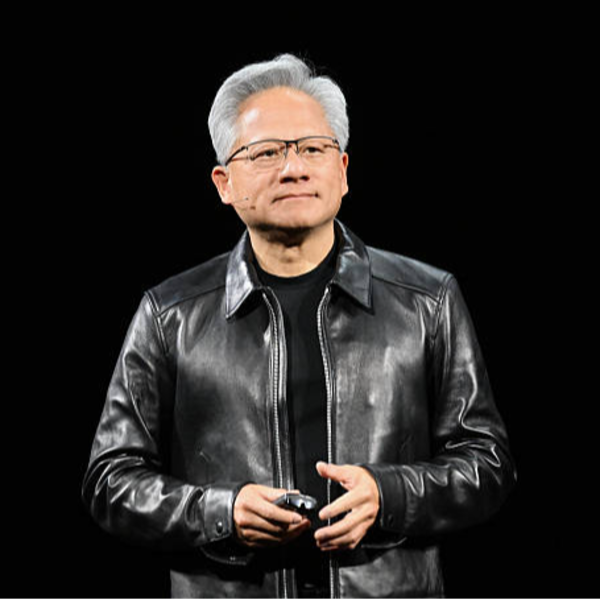
Nvidia CEO Jensen Huang Faces Congressional Scrutiny Over Reported Ties to Suspected Chinese Intelligence Asset
Tesla, Inc. (TSLA.US) Cybertruck: From a cracked window to discontinuation, the end of a three-and-a-half-year run
No change to policy course! Trump replaces White House Chief of Staff, appoints "hardliner" Stephen Miller.
Nvidia CEO Jensen Huang Faces Congressional Scrutiny Over Reported Ties to Suspected Chinese Intelligence Asset




