HSBC Shares Fall 6.5% on Revenue Miss Despite 32% Profit Growth and $1 Billion Buyback


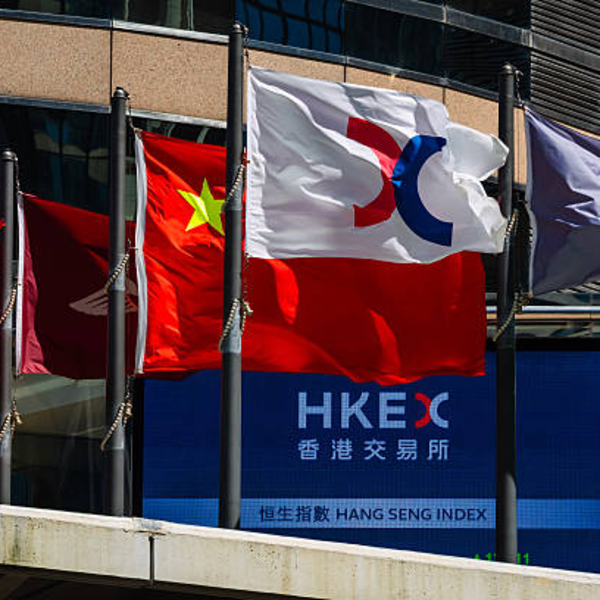
HSBC shares declined sharply following the release of its third-quarter financial results, as weaker-than-expected revenue overshadowed strong annual profit growth and a new share repurchase announcement. The bank's London-listed shares dropped approximately 6.5% in early European trading, putting them on course for their steepest single-session decline since April 2025. Its Hong Kong-listed shares also fell 2.95% following the earnings release.
The British-headquartered banking group reported third-quarter revenue of $18.6 billion, compared with $17.8 billion in the same period last year. Although revenue increased approximately 4.5% year-over-year, it fell short of the $18.93 billion consensus estimate compiled by HSBC. Pre-tax profit reached $9.63 billion, narrowly missing analysts' expectations of $9.69 billion.
Profit before tax increased 32% from a year earlier, supported by higher revenue, lower credit losses and the absence of significant legal provisions recorded in the prior-year period. HSBC had recognized $1.4 billion in legal provisions during the comparable quarter of 2025, meaning that part of the reported profit improvement reflected the non-recurrence of those expenses.
The bank's net interest income reached $9.3 billion during the quarter, supported by deposit growth and the reinvestment of its structural hedge at higher yields. Banking net interest income increased 6%, demonstrating continued strength in the bank's core banking activities. Higher fee income from corporate and institutional banking, as well as wealth management, provided additional support to overall revenue.
Operating expenses declined 12% year-over-year to $8.8 billion, largely because the previous year's legal provisions did not recur. However, excluding notable items, underlying costs increased due to inflationary pressures and additional spending on technology. This suggests that cost management remains an important priority even as HSBC benefits from stronger business activity.
Citi analysts described the quarterly performance as mixed, highlighting a revenue shortfall of approximately 2% against expectations. Nevertheless, they noted that HSBC achieved a year-to-date return on tangible equity of 18.8%, comfortably above its medium-term guidance of approximately 17%. The profitability measure indicates that the bank continues to generate strong returns on shareholder capital despite the weaker-than-expected revenue result.
Alongside its earnings announcement, HSBC unveiled plans for an additional share buyback of up to $1 billion. The bank confirmed that it had completed the $1 billion repurchase program announced with its interim results and expects to complete the newly announced buyback before releasing its full-year 2026 financial results. HSBC also approved a third interim dividend of 10 cents per share, reinforcing its commitment to returning capital to shareholders.
The additional buyback highlights management's confidence in HSBC's financial position and capital generation. Share repurchases can improve earnings per share by reducing the number of shares outstanding, while dividends provide direct cash distributions to investors. However, the negative market reaction suggests that shareholders were more focused on the revenue miss and future earnings momentum than on the announced capital returns.
Looking ahead, HSBC maintained its forecast for banking net interest income of at least $46 billion in 2026. The bank also reiterated its target of achieving a return on average tangible equity of at least 17% from 2026 through 2028, excluding notable items. These objectives indicate that management expects profitability to remain resilient despite changes in interest rates and the broader economic environment.
HSBC also reaffirmed its ambition to deliver annual revenue growth through 2028, targeting a 5% increase in 2028 compared with 2027 on a constant-currency basis and excluding notable items. On expenses, the bank expects operating costs to rise approximately 1% in 2026 on its target basis, although stronger business performance could result in higher performance-related compensation and modestly greater cost growth.
The bank's efficiency strategy is also attracting attention amid reports that HSBC is considering significant job reductions within its U.K. wealth management business. According to the Financial Times, the potential cuts are linked to a broader effort to incorporate artificial intelligence into banking operations. The reported restructuring has not been confirmed in the earnings information provided, and its potential scale and timing remain uncertain.
The development reflects a broader transformation across the financial services industry, where banks are increasingly investing in automation and artificial intelligence to improve productivity and manage long-term operating expenses. For HSBC, balancing technology investment with cost discipline will be important as it seeks to expand its wealth management and institutional banking operations.
Despite the disappointing market reaction, HSBC's quarterly results demonstrated continued earnings resilience, supported by stronger net interest income, diversified fee revenue and lower credit losses. Its profitability remains above management's medium-term target, while the additional buyback and dividend underscore the bank's focus on shareholder distributions.
Looking ahead, investors will closely monitor whether HSBC can translate its financial strength into more consistent revenue growth while controlling underlying expenses. The bank's ability to deliver its 2026–2028 profitability targets, sustain capital returns and improve operating efficiency will be central to its longer-term investment outlook.