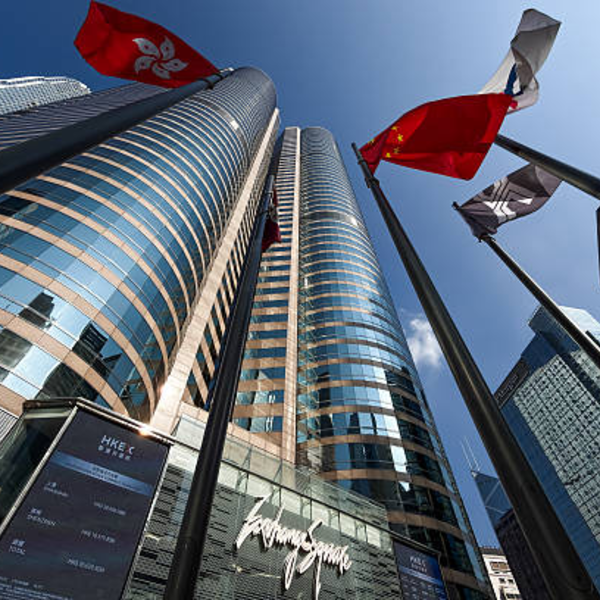
Chinese Quant Fund Lingjun Secures $300 Million in Overseas Investment as AI Innovation Revives Global Interest


Beijing-based Lingjun Investment, once among China's four largest quantitative hedge funds, has secured at least $300 million in offshore investments through its Hong Kong subsidiary, Lingjun Capital. Founder and chairwoman Cai Meijie confirmed that the capital originated from a U.S. institutional investor and several Southeast Asian clients. The firm is also conducting advanced discussions with a Southeast Asian sovereign wealth fund regarding a potential $150 million investment and is actively approaching investors in the Middle East. These developments represent an important turnaround for Lingjun, which suspended fundraising for approximately two years following regulatory enforcement measures in early 2024. Established in 2014, the firm previously managed approximately 100 billion yuan ($15 billion) in assets before its assets under management declined to roughly 50 billion yuan ($7.49 billion). Its renewed ability to attract foreign institutional capital suggests that confidence in China's quantitative investment industry is gradually recovering despite the regulatory challenges that have affected the sector.
Lingjun's difficulties began in February 2024, when the Shanghai and Shenzhen stock exchanges imposed a three-day trading suspension after identifying violations of trading rules. The penalties emerged during a broader regulatory crackdown on quantitative hedge funds, which Chinese authorities accused of amplifying market volatility during a period of significant equity market weakness. Quantitative investment strategies employ mathematical models, statistical analysis, and automated trading algorithms to identify market opportunities, frequently allowing investment decisions to be executed at speeds beyond traditional discretionary trading. Although these technologies can improve market efficiency and liquidity, regulators have expressed concerns about their potential to intensify price movements, particularly when numerous algorithms respond simultaneously to similar market signals. In response to the enforcement action, Lingjun substantially restructured its internal governance and risk-control systems. The firm doubled the size of its risk-management team, incorporated automated compliance checks into its trading infrastructure, and established a five-member investment committee to standardize investment decisions. Cai acknowledged that shortcomings in the firm's previous governance arrangements had contributed to its difficulties, describing the regulatory intervention as an important lesson for the company.
The firm's improved investment performance has been another important factor supporting its fundraising recovery. According to data from Chinese fund distributor Simuwang.com, Lingjun's flagship equity fund generated returns exceeding 70% in 2025, placing it among China's strongest-performing hedge funds. During the first nine months of 2026, the fund delivered additional gains of more than 10%, despite a less favorable domestic equity market. For comparison, China's CSI 300 benchmark gained approximately 18% in 2025 but declined around 6% during the first nine months of 2026. This performance differential has helped strengthen Lingjun's investment proposition to international institutions seeking alternative sources of returns and exposure to China's financial markets. Meanwhile, the rapid development of Chinese artificial intelligence has created additional interest in the quantitative investment sector. Cai highlighted the international attention surrounding DeepSeek, the AI company associated with quantitative investment firm High-Flyer, as an important factor reshaping investor perceptions. Rather than viewing Chinese quantitative funds primarily as high-frequency trading operations, investors are increasingly examining their ability to incorporate advanced AI models into portfolio construction, financial forecasting, and risk management.
Lingjun's successful fundraising could have wider implications for China's hedge fund industry and the internationalization of its asset-management sector. The combination of stronger investment returns, technological innovation, and stricter governance standards may encourage additional global institutions to reconsider Chinese quantitative strategies after a period of caution. Hong Kong remains an important gateway for this expansion, allowing mainland investment managers to establish offshore operations and engage with international capital providers. Nevertheless, Lingjun's recovery does not eliminate the risks associated with algorithmic trading, including sudden market dislocations, model failures, and potential regulatory intervention. The firm's proposed $150 million sovereign wealth fund allocation also remains under negotiation rather than representing completed fundraising. Looking ahead, the sustainability of Lingjun's international expansion will depend on its ability to maintain investment performance, demonstrate effective risk controls, and comply with evolving Chinese financial regulations. Its experience highlights a broader transition in China's quantitative investment industry, where technological sophistication must increasingly be accompanied by operational transparency and institutional-grade governance.